
Tony Romo Breaks His Silence on OWI Arrest: Painkillers, Alcohol, and What Comes Next at CBS
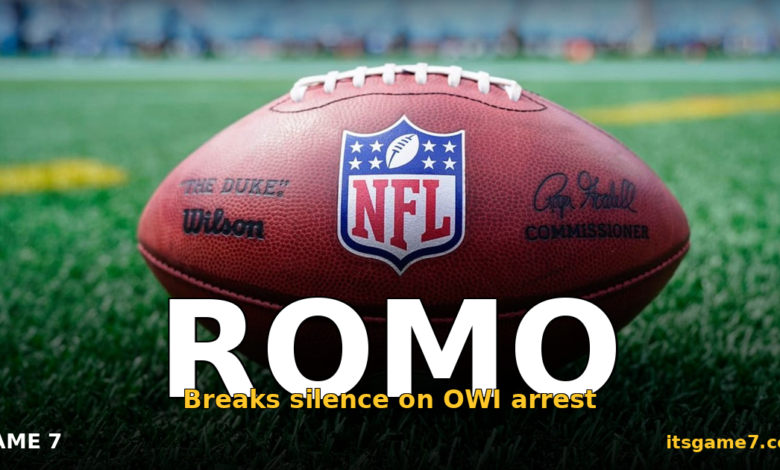
Tony Romo issued a long, personal statement Tuesday about his July arrest in Milwaukee for operating while intoxicated, pleading no contest to the civil offense and admitting to a dependence on pain medication and alcohol.
This was not a canned PR release. This was Romo being honest about how he got here, and it changes the conversation about his future at CBS.
Here is the part that matters most: “Multiple back surgeries ended my career earlier than I expected and left me with constant, debilitating pain. That pain led to a dependence on pain medication, and my efforts to get off those medications led to an over-reliance on alcohol.”
Romo also wrote, “None of this is an excuse. These are my failures, and I take responsibility for them.”
That is the right tone. This is not a plea for sympathy. It is a public acknowledgment of a problem that a lot of retired NFL players deal with quietly, and it is a rare moment of transparency from a broadcaster who is under contract for another six years at roughly $18 million a year.
The path back to the CBS booth is still not clear. CBS placed Romo on leave at the end of July. JJ Watt has been filling in and has been solid. CBS Sports president David Berson has publicly said the network needs to protect its image, which was a signal to anyone paying attention that this is a real business decision, not a formality.
Contracts of this size do not get torn up lightly. Romo is guaranteed a fortune, and CBS is on the hook for it whether he calls games or not. That gives him leverage to negotiate a return, but it also gives CBS every incentive to make sure the return does not create a new problem.
The comeback path that makes sense: Romo enters a formal treatment program if he has not already. He accepts a specific timeline of check-ins and disclosures. He agrees to a public plan for how the network communicates with fans and advertisers. And CBS eases him back into a smaller role before restoring him to the No. 1 booth alongside Jim Nantz.
The other option is a mutual separation. CBS pays Romo out or restructures the deal. He tries to rebuild in a smaller role somewhere else. That would be a sad ending to what was once a great broadcasting story.
Remember, Romo was hired in 2017 to be a fresh voice, and for a couple of years he was the best analyst on television. His predictions during live games became a running bit, and his enthusiasm for the sport was contagious. Then the criticism started coming, some of it deserved. He seemed less prepared. His signature schtick got old.
Whatever he was in his second CBS contract, the human being underneath was clearly struggling. That is the context for what happened in Milwaukee, and it is the context CBS has to consider now.
The bigger picture is that professional athletes deal with chronic pain in ways that fans do not always see. Romo just made it visible in a way most retired players never do. Whatever CBS decides, that honesty deserves respect.
A longtime sports reporter, Carlos Garcia has written about some of the biggest and most notable athletic events of the last 5 years. He has been credentialed to cover MLS, NBA and MLB games all over the United States. His work has been published on Fox Sports, Bleacher Report, AOL and the Washington Post.
