
New Study Finds NFL Players Nearly Four Times More Likely to Die of Neurodegenerative Disease
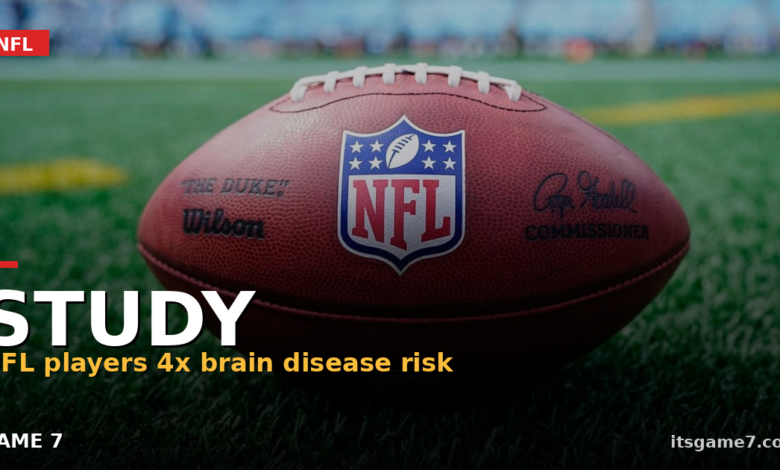
The latest research on football and long-term brain health is not going to make the NFL comfortable. A new study finds that NFL players are nearly four times more likely to die of a neurodegenerative disease than the general population.
The findings, published this week, add to a growing body of medical evidence that the sport creates real long-term risk even for players who never suffered a diagnosed concussion during their careers. Neurodegenerative diseases in this study include ALS, Parkinson’s, Alzheimer’s, and other forms of dementia including chronic traumatic encephalopathy.
The methodology tracked death certificates and cause of death data for retired NFL players over a multi-decade window. The numbers held up across position groups and eras. Linemen, running backs, and defensive backs all showed elevated risk. Even players from the pre-modern-helmet era showed the same pattern as players who competed in the last 20 years with supposedly better equipment.
The NFL has spent the last decade putting money into player safety research, rule changes designed to reduce helmet-to-helmet contact, and post-career health programs. The findings from this study will inevitably raise questions about whether any of it has moved the needle on the underlying long-term risk.
The kickoff rule changes, the targeting rules, the guardian caps in practice, the concussion protocol enforcement. All of it is designed to reduce brain trauma incidence. The problem is that the accumulated damage from thousands of subconcussive impacts over a career appears to be the actual driver, not the diagnosed concussions.
You cannot legislate blocking and tackling out of football. The rule changes make the game marginally safer. They do not make it safe. And the players themselves are largely aware of the trade-off. They play anyway because the money is life-changing and the alternative career options usually are not.
What this study does is make it harder for the league to argue that the health risks are speculative or overblown. This is peer-reviewed medical data. Four times the general population risk is not a rounding error. That is a signal.
The families of former players are the ones who tend to end up carrying the burden. Widows and adult children have watched fathers deteriorate through their 50s and 60s in ways that are not normal aging. Junior Seau. Aaron Hernandez. Kevin Turner. Andre Waters. The names on the CTE list keep growing.
The NFL has settled a class action lawsuit with retired players for close to a billion dollars in 2013. That settlement excluded CTE as a compensable diagnosis for players who died after the effective date. Legal challenges from families of players who died from CTE-related complications after that cutoff have been ongoing.
New research like this will affect that legal landscape. It will affect insurance rates. It will affect how younger athletes and their parents think about the sport at the youth level. Youth football participation has been declining for a decade. Studies like this accelerate that trend.
The league is going to keep going. The money is too big. The audience is too big. But every study that comes out like this one makes the moral cost of being a fan a little more explicit. Anyone watching NFL games is watching people who are statistically likely to pay for it with their brain function 20 years from now. That is the actual price of the sport.

A longtime sports reporter, Carlos Garcia has written about some of the biggest and most notable athletic events of the last 5 years. He has been credentialed to cover MLS, NBA and MLB games all over the United States. His work has been published on Fox Sports, Bleacher Report, AOL and the Washington Post.
