
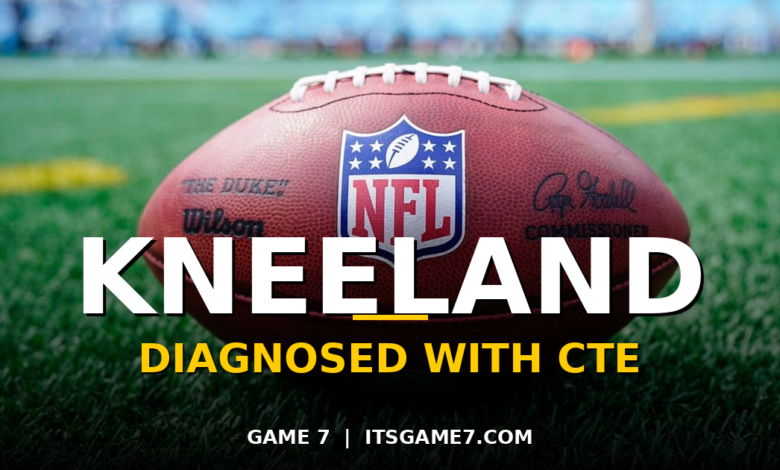
Marshawn Kneeland had stage 1 CTE. He was 24 years old.
The Boston University CTE Center confirmed the diagnosis this week, months after the former Dallas Cowboys defensive end died last November of a self-inflicted gunshot wound following a police chase. Officers had been dispatched on a wellness check. He never made it home.
This is not the story we should be writing about a young NFL player. And yet, tragically, it is not a story we can call surprising anymore.
Dr. Ann McKee, the director of the BU CTE Center and the leading researcher in the world on this disease, delivered a statistic that should stop the entire sport in its tracks. Nearly half of the athletes her center has studied who died before the age of 30 had CTE.
Half. Before 30.
These are not aging veterans with decades of hits piled up. These are young men, some barely out of college, whose brains already showed the physical damage of a disease that traditionally was associated with lifelong football players in their 50s, 60s, and 70s. The timeline is collapsing, and the sport does not have an answer.
CTE can still only be diagnosed after death. That is the cruelest part of all of this. There is no test a living player can take. There is no imaging that catches it in time. Symptoms show up as mood changes, depression, impulse control issues, cognitive decline, and by the time they surface, families are often left trying to piece together what was happening in silence.
Kneeland’s family, teammates, and everyone who loved him deserve compassion right now, not think pieces. But the football community also has an obligation to sit with what this diagnosis means.
He played five years of college ball at Western Michigan before Dallas drafted him in 2024. He had one full NFL season. That is enough football, at the pace and violence of the modern game, to leave measurable brain damage in a young man who should have had decades of life ahead of him.
The NFL has made changes over the last decade. Rule modifications on targeting, updated concussion protocols, guardian caps in practice, an increased focus on player mental health resources. Those steps matter. But the diagnoses keep coming, and the age of the players receiving them keeps dropping.
There is no easy conclusion here. Football is not going away. The sport is beloved, and it employs tens of thousands of people, and it will continue to be played at every level from youth leagues to Sundays in the fall. That reality is not changing.
What has to change is the honesty of the conversation. Players deserve to know what they are signing up for. Families deserve support systems that extend well beyond the final whistle of a career. And medical research deserves the funding and access it needs to eventually catch this disease in living patients.
Marshawn Kneeland should still be here. His story should have been about sacks and Sundays and a long career in silver and blue. Instead, it is about a young man whose brain was already sick and whose pain we did not see in time.
The football world owes it to him, and to every player who comes next, to keep pushing for better answers.
If you or someone you love is struggling, please reach out. The 988 Suicide and Crisis Lifeline is available 24/7 by call or text at 988. You are not alone, and help is there.
A longtime sports reporter, Carlos Garcia has written about some of the biggest and most notable athletic events of the last 5 years. He has been credentialed to cover MLS, NBA and MLB games all over the United States. His work has been published on Fox Sports, Bleacher Report, AOL and the Washington Post.
