
NCAA Tournament Expands to 76 Teams: What March Madness Will Look Like in 2027
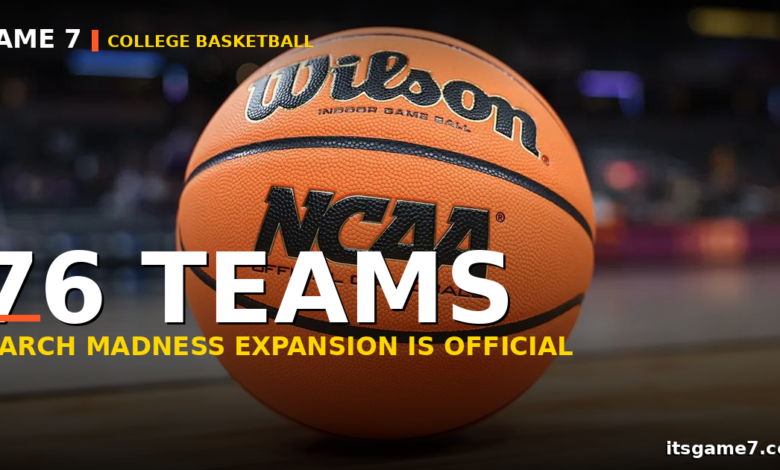
March Madness is getting bigger. The NCAA has officially voted to expand both the men’s and women’s basketball tournaments from 68 to 76 teams beginning with the 2027 event.
The Division I Board of Governors approved the expansion earlier this year, and now that the fifth-year eligibility fights are calming down, this becomes the next major structural change reshaping college basketball.
The format details are worth breaking down. After an expanded Opening Round of games, 64 teams will still remain when the main bracket starts. So the classic First Round rhythm of 32 games across Thursday and Friday, followed by the Round of 32 over the weekend, doesn’t change at all.
What changes is the front end. Instead of the current First Four with four play-in games in Dayton, the expanded field will have eight Opening Round games. Those matchups will determine which 8 teams advance to fill out the field of 64 for the main bracket.
The financial impact for schools is significant. The NCAA will be able to distribute more than $131 million in new revenue to member schools participating in the tournaments over the remaining six years of the current broadcast agreements. That’s real money that helps athletic departments justify the change.
Historically, this is a big deal. The last time the men’s tournament expanded significantly was in 1985 when it moved from 53 to 64 teams. The move to 68 in 2011 was a smaller adjustment. The jump to 76 is the biggest expansion in more than 40 years.
Fans have opinions on this, and most of those opinions are negative. The main criticism is that expansion dilutes the field. The current 68-team format already includes some marginal teams. Adding 8 more spots means bringing in mid-major bubble teams and power conference squads that finished with losing records in league play.
The counter-argument is about opportunity. More teams means more programs get March Madness experience. Small conferences get more automatic bid consideration. Recruiting benefits at schools that make the tournament regularly. And frankly, the added games generate more TV inventory that networks and advertisers are eager to pay for.
The women’s tournament expansion is the less controversial part of this. Women’s college basketball is in a growth phase after the Caitlin Clark era changed viewership numbers permanently. Adding 8 more teams to that bracket gives more programs national exposure at exactly the right moment for the sport.
For coaches and administrators, expansion changes recruiting pitches. Making the NCAA Tournament becomes slightly easier, so more programs can point to postseason appearances as evidence of success. That helps mid-major programs recruit against power conference schools that historically dominated the “we go to the tournament” pitch.
For bracket enthusiasts, the pool implications are minor. Most tournament pools already give players options for how to handle First Four games. The expanded Opening Round will just extend those rules. The main bracket of 64 stays the same, so nothing changes about how you’ll fill out your bracket with friends and family.
The broadcast schedule is where things get interesting. Extra tournament games mean more TV inventory for CBS and Turner. Expect additional games to be spread across networks including truTV, TBS, and possibly some streaming exclusives. The tournament footprint expands in every direction.
March Madness has always evolved. It went from 8 teams to 25 to 32 to 40 to 48 to 53 to 64 to 68. Now it goes to 76. The sport is bigger than ever, and the tournament is getting bigger to match.
Whether that makes the tournament better is a question that only starts to get answered in 2027. Until then, get ready for a slightly different bracket printout in your office pool.

A longtime sports reporter, Carlos Garcia has written about some of the biggest and most notable athletic events of the last 5 years. He has been credentialed to cover MLS, NBA and MLB games all over the United States. His work has been published on Fox Sports, Bleacher Report, AOL and the Washington Post.
