
The ‘Lane Kiffin Rule’ Just Hit the Senate. Will College Football’s Wild West Finally Get a Sheriff?
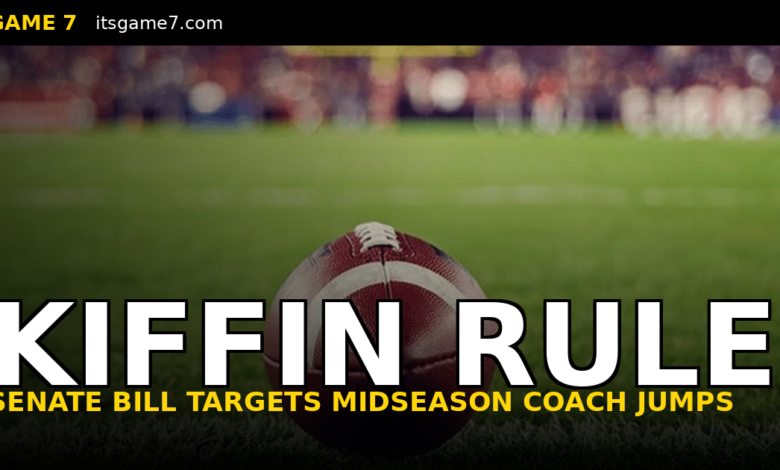
Lane Kiffin walked out on Ole Miss in the middle of a College Football Playoff run to take the LSU job. Now Congress wants to make sure no one ever does it again.
Sens. Ted Cruz (R-Texas) and Maria Cantwell (D-Wash.) introduced the Protect College Sports Act on Tuesday, a bipartisan bill that would bar FBS head coaches from leaving for another school before their season ends. Coaches who violate the rule would be ineligible to coach anywhere the following season. The provision has already been nicknamed the “Lane Kiffin Rule” inside the Capitol.
That is not a small piece of legislation. That is the federal government walking into a room that the NCAA has been losing in court for five straight years.
Why This Bill Has Real Teeth
The bill goes further than just punishing midseason coaching jumps. It limits players to one unrestricted transfer during their college careers. It moves toward a five-year eligibility window the NCAA was already considering. It includes a limited antitrust exemption the NCAA has been begging for since the House settlement. And it preempts the patchwork of state NIL laws that have turned every conference into its own legal jurisdiction.
Cruz and Cantwell are the right names to put on this. Cruz chairs the Senate Commerce Committee. Cantwell is the ranking member. If those two agree on anything in 2026, it has a real chance of passing.
The bigger context here is that the Big Ten and SEC have been openly flirting with a breakaway. Georgia head coach Kirby Smart said last week he is “not afraid to break away” from the NCAA. This bill is partly aimed at keeping that from happening. Give the NCAA an antitrust exemption and a real federal framework, and the super-conference threat loses its leverage.
Will Coaches Actually Be Stopped?
Probably not entirely. Kiffin’s situation is the obvious case study. Ole Miss had agreed to let him talk to LSU mid-playoff. A school could always wave the contract and say it consented. But the rule still raises the cost. A coach who jumps without permission would lose a full year of pay and have to explain himself to every program he ever wants to work for.
And it shifts the conversation. For two decades the conversation has been about what players can do. Now the same kind of rules apply to the guys in the headsets. About time.
The Verdict
This bill is going to face every legal challenge in the book. Lawyers for big-name coaches will argue restraint of trade and freedom of contract. Some version of it probably gets watered down. But the writing is on the wall.
College football has finally embarrassed itself enough that Washington is paying attention. The Lane Kiffin saga turned out to be the moment the sport handed the keys to Congress. Funny how that works.
A longtime sports reporter, Carlos Garcia has written about some of the biggest and most notable athletic events of the last 5 years. He has been credentialed to cover MLS, NBA and MLB games all over the United States. His work has been published on Fox Sports, Bleacher Report, AOL and the Washington Post.
